How to Stop Blundering in Chess: A Beginner's Guide (+ a Free Trainer)
Most beginner games are lost by simple blunders. Usually that means a piece left hanging, or a simple combination that was overlooked. Want to know how to stop blundering in chess? It's as simple as one, two, three!
The short version: The blunderer is the best tactics trainer in the world. Why? Because it trains you to both see the blunders that your opponents have made on the board, and take advantage and just as importantly avoid the game losing blunder that you were about to make when it was your turn to move! That last part is important because most tactics trainers do not train this. the Blunderer shows you a real position with two moves. One is safe. One is the tempting blunder that hangs a piece or walks into a simple combination. Then as you move up the ladder you fight monsters and bosses and they flip the board and make you play tactics from the winning side! This is unique in a tactics trainer. It is free and it takes seconds per puzzle.
The one check that stops you blundering
Most blunders come down to one of two things. Either you left a piece hanging, or you missed a simple combination. And simple combinations almost always aim at one of two targets: an open or vulnerable king, or loose or undefended pieces. That's the real answer to how to stop blundering in chess: learn to spot those two targets, for you and your opponent, before every move. The check below is built around them.
The promise of this post is simple: if you ask three quick questions before every move, you will stop hanging pieces and stop missing simple combinations. That's the whole idea. Before you touch a piece, ask:
- What does their last move do? Look at the piece that just moved. What can it take now?
- Are any pieces undefended, mine or my opponent's? If so, can either side take advantage of it?
- A vulnerable king that is open to checks
Can my opponent sacrifice pieces or pawns to threaten my king?
It takes a few seconds. You don't need to calculate long lines, as the checks just alert you to the possibility a tactic exists. The three checks do not tell you what tactic it is. That's where tactical training comes in and why you should use the blunderer! You only need to see the loose piece or the open king before your opponent does. Knowing the checks is easy; doing it every single move is the hard part, and that is what practice is for.
A chess blunder, step by step: how a piece gets hung
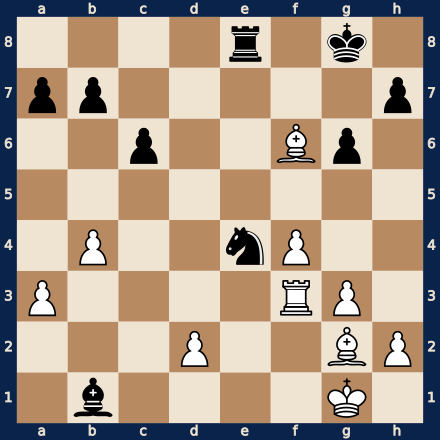
This is a real position from the Blunderer puzzle set (not a game from any named player). White to move. Blunderer offers two moves here: one safe, one tempting. Use the buttons to step through each line yourself.
What the player sees
Material is level. Black's knight sits in the middle on e4 and Black's rook on e8 is lined up behind it. White's bishop on f6 looks active near Black's king.
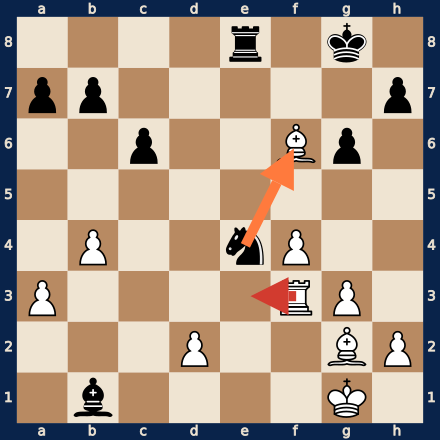
Chess blunder example: Re3 (red) leaves the f6 bishop hanging and the knight takes it, Nxf6 (orange)
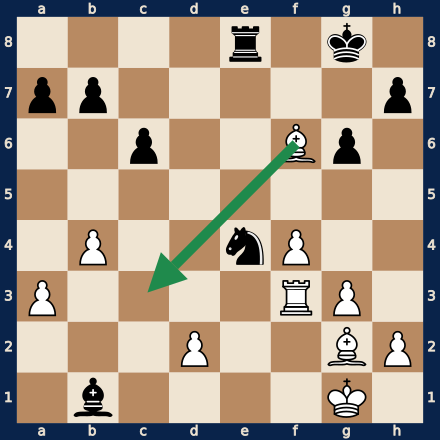
How to avoid blunders in chess: the safe move Bc3 (green) moves the attacked bishop to a guarded square
The tempting blunder Blunderer flags: Re3??
Re3 attacks the knight, and once the rook leaves f3 the g2 bishop hits e4 as well. It feels like pressure. But run question 2 of the check: are any pieces undefended? White's bishop on f6 is. Black's knight attacks it, and nothing defends it. After Re3, Black plays Nxf6 and White is simply a piece down (Blunderer's engine check: −4.41).
The better move: Bc3
Bc3 moves the attacked bishop to a square guarded by the d2 pawn and the f3 rook. After Nxc3 dxc3 it is an even trade and the game goes on (engine check: +0.34). Nothing fancy. Just not hanging a piece.
This is the exact moment the Blunderer trains. Not a hard tactic, just one second where you either check for undefended pieces or you don't. Every Blunderer puzzle is a moment like this one.
The 50/50 drill: how to stop blundering through practice
Reading about blunders helps, but you avoid blunders in chess by practicing the moment itself. That's why the Blunderer uses a 50/50 format: every puzzle gives you two moves. One is safe. The other is the tempting trap that hangs a piece or walks into a simple combination. There's no long line to calculate; you just have to run the check and spot the trap.
This is the exact moment beginners lose games: a normal-looking position, a move that looks natural, and a piece that quietly becomes undefended. If you pick the trap, Blunderer plays the punishing line on the board, so you see how you would have lost the piece and remember it next time.
Puzzles matched to your level
The Blunderer gives you a rating, and puzzles are picked to sit close to it. Your rating goes up when you find the safe move and down when you blunder, so the puzzles adjust as you play. The set runs from beginner positions (rated around 400) through intermediate up to grandmaster level (rated as high as 3300). A new player gets positions they can handle, and as you stop hanging pieces the puzzles get harder, so it keeps challenging you as you improve. Sign up to track your rating.
Try it: three Blunderer puzzles to stop hanging pieces
These three come straight from the Blunderer puzzle set. Run the blunder check, then tap a move. If you pick the trap, step through the punishing line with the arrows.
Puzzle 1 · Black to move. Which move is safe?
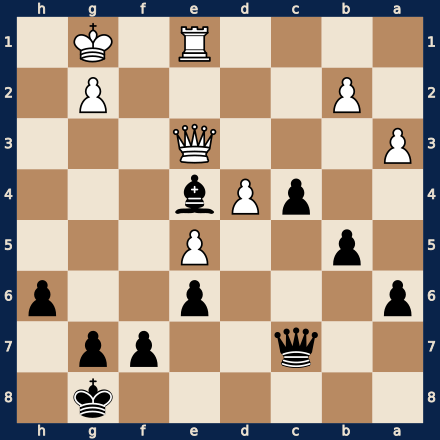
Black to move: Bd3 or Qc6? Answer: Bd3 is safe. Qc6?? loses the bishop after Qxe4.
Puzzle 2 · Black to move. Which move is safe?
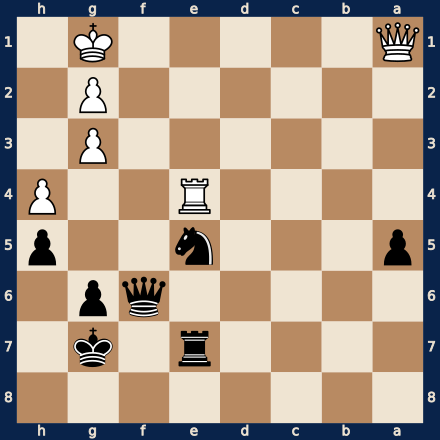
Black to move: Nf7 or Ng4? Answer: Nf7 is safe. Ng4?? loses a rook after Rxe7+.
Puzzle 3 · Black to move. Which move is safe?
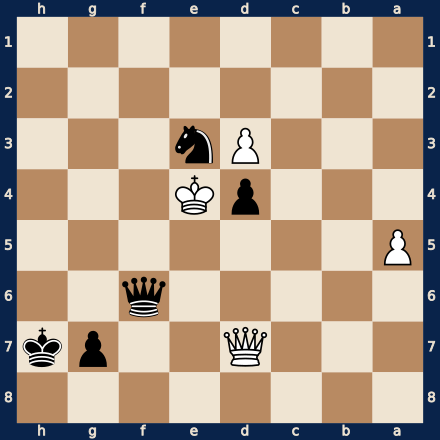
Black to move: Nf5 or Kg6? Answer: Kg6 is safe. Nf5?? loses a knight after Qxf5+.
Want more? The Blunderer has over 3,300 puzzles matching to your rating.
Why use the Blunderer?
The tactics trainer built to stop blunders
Most tactics trainers ask you to find a brilliant combination. The Blunderer trains the skill that actually loses beginner games: spotting the move that hangs a piece before you play it. It is free, it runs in your browser with nothing to download, and a free account saves your rating. Here is everything it does, and why each part helps.
1. The 50/50 format: two tempting moves, one blunder
Every puzzle shows two candidate moves, marked with numbered arrows on the board. Both look playable. One is safe; the other is the blunder. There is no long line to calculate: you run the blunder check and spot the trap. String together a run of first-try right answers and hard mode can switch on, with harder three-option puzzles where two of the three moves are blunders.
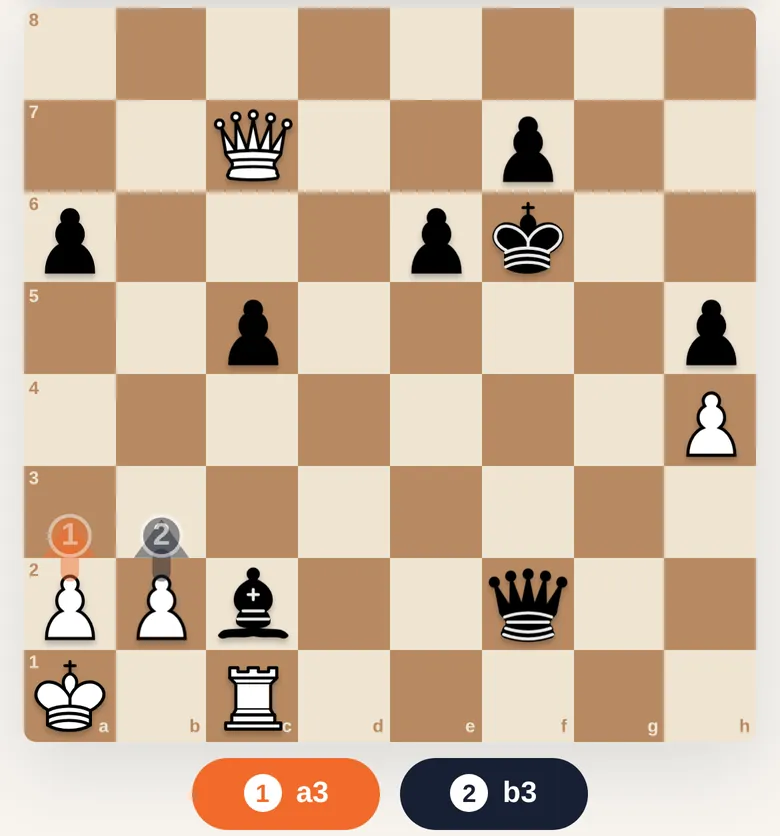
2. Interactive boards that show you why
After you answer, the board comes alive. Pick the blunder and the Blunderer plays out how you get punished: step through the line with Back and Forward, or press Play line to watch it. The engine score for both moves is shown with a one-line explanation, you can retry the puzzle, and one tap opens the position on Lichess if you want to dig deeper.
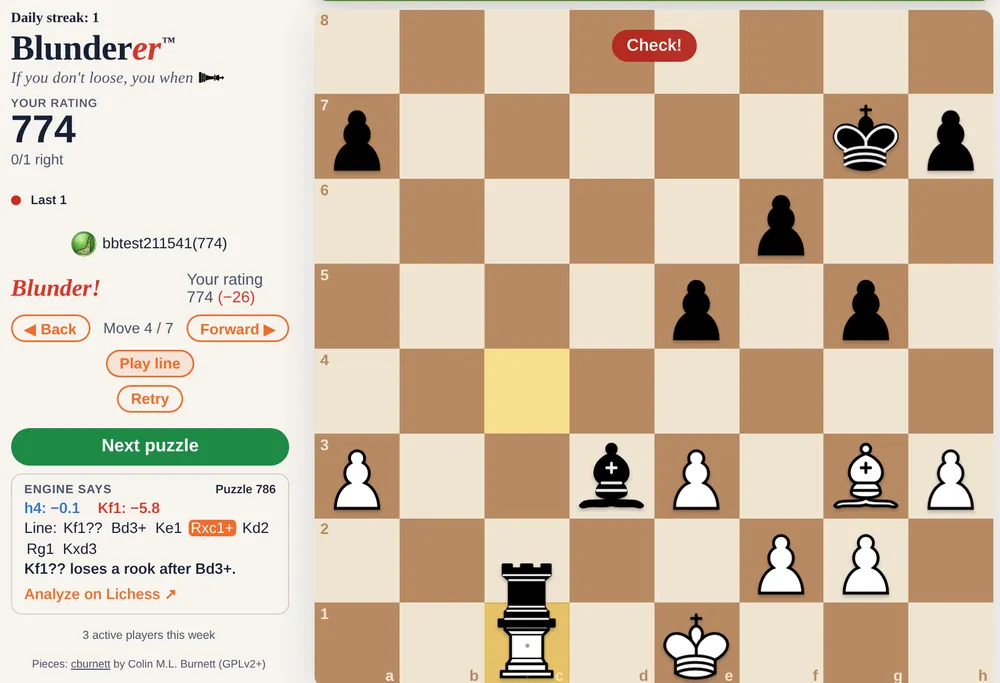
3. Puzzles matched to your rating
The Blunderer has over 3,300 puzzles, from about 400 up to grandmaster level, built from rated puzzles in the Lichess puzzle database, and around 100 new ones are added every day. Each puzzle is picked close to your own rating: find the safe move and your rating goes up, blunder and it goes down, so the puzzles keep pace as you improve. The Horizon strip above the board shows where you stand, with real players just below and above your rating and the next gatekeeper waiting at its gate.
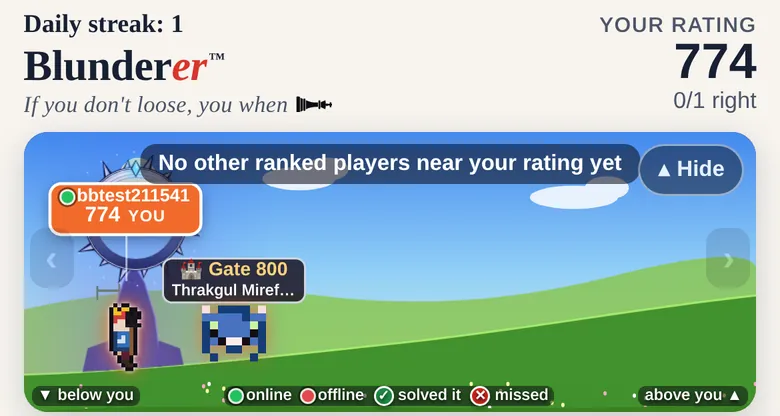
4. A top-100 leaderboard with monsters living on it
The Top 100 ranks players by Blunderer rating (20 rated puzzles gets you on it), with each player's accuracy, bosses beaten, gates cleared and puzzles solved. It is not just a list of names. Little monsters live on the leaderboard: the gatekeepers sit between the players at their gate ratings, and two secret bosses prowl it. The Top Dog Troll hunts the top 5 players, and the Accuracy Goblin goes after strong players with high accuracy. The small monsters beside a name are the ones that player has killed.
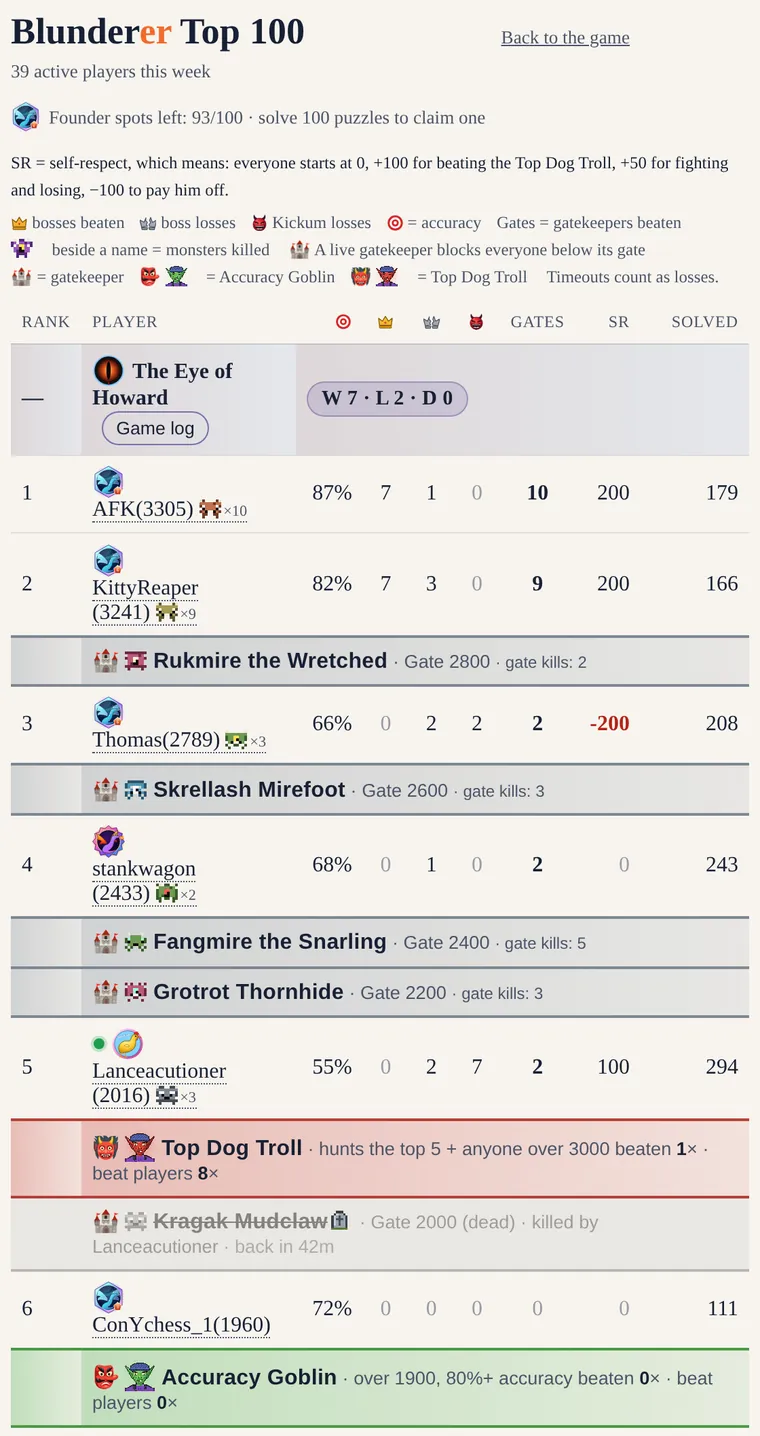
5. Gatekeepers to fight and bosses to beat
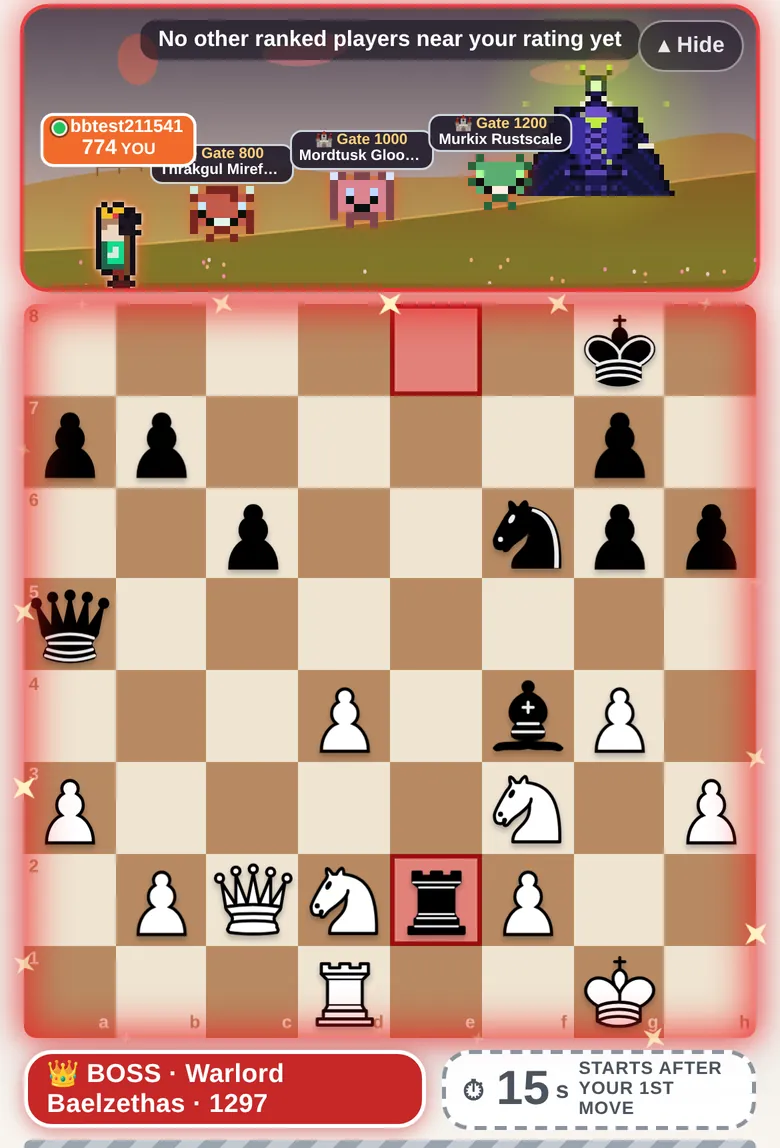
Gatekeepers guard every 200 points from 800 to 2800. While a gatekeeper is alive, nobody below its gate can climb past it without beating it. Reach the gate and your next puzzle is a fight: a real Lichess tactic where you must play the whole winning line against a 15-second clock that starts after your first move, and one wrong move means the gatekeeper wins. Beat it and you climb on and keep it as a trophy; a beaten gatekeeper stays dead for a while, then a brand-new one spawns.
Bosses work the same way but come to you: get on a streak of right answers and a boss can appear, and the longer your streak, the stronger the boss. Miss a few in a row and Kickum While There Down may turn up instead.
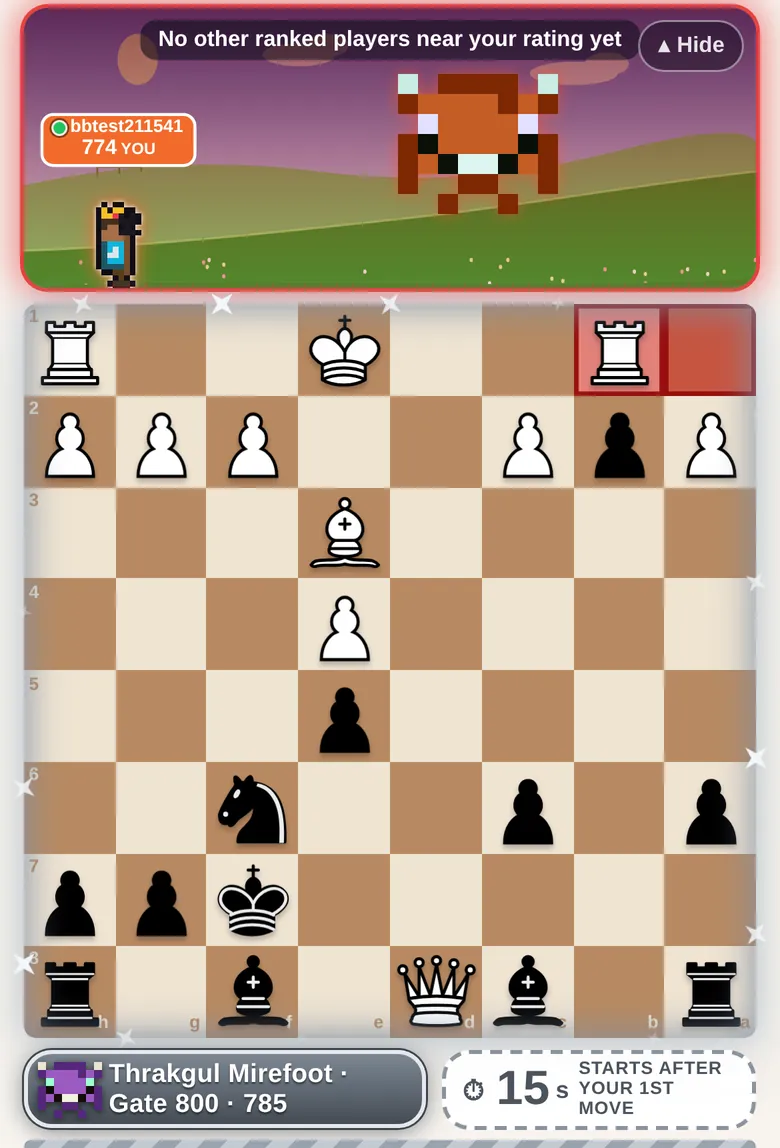
6. Difficulty tuned by Howard
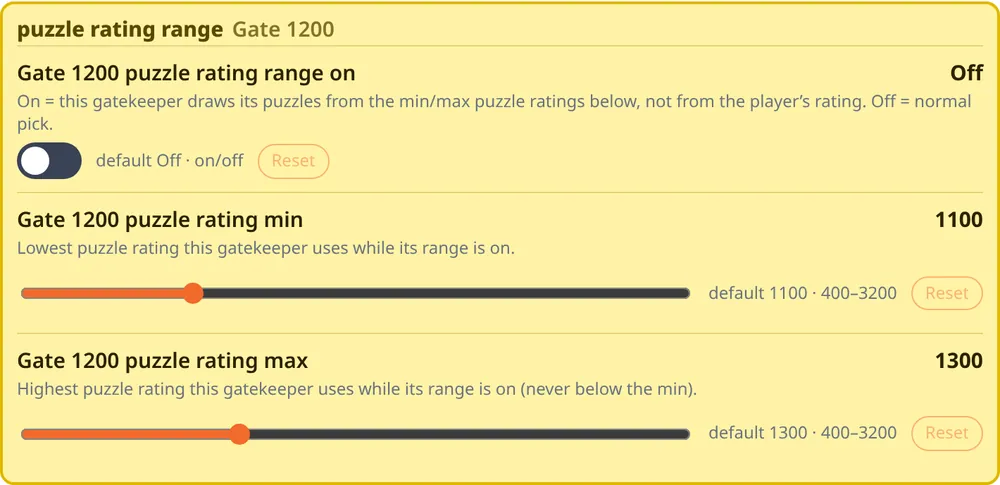
The Blunderer is not left on autopilot. Howard tunes the game himself from its control panel. For example, each gate has its own puzzle rating range: a lowest and highest puzzle rating that gatekeeper can draw its fights from, so he can make one gate tougher or kinder without changing anything else.
7. More reasons to keep coming back
- Daily streak. Play every day and watch the streak grow.
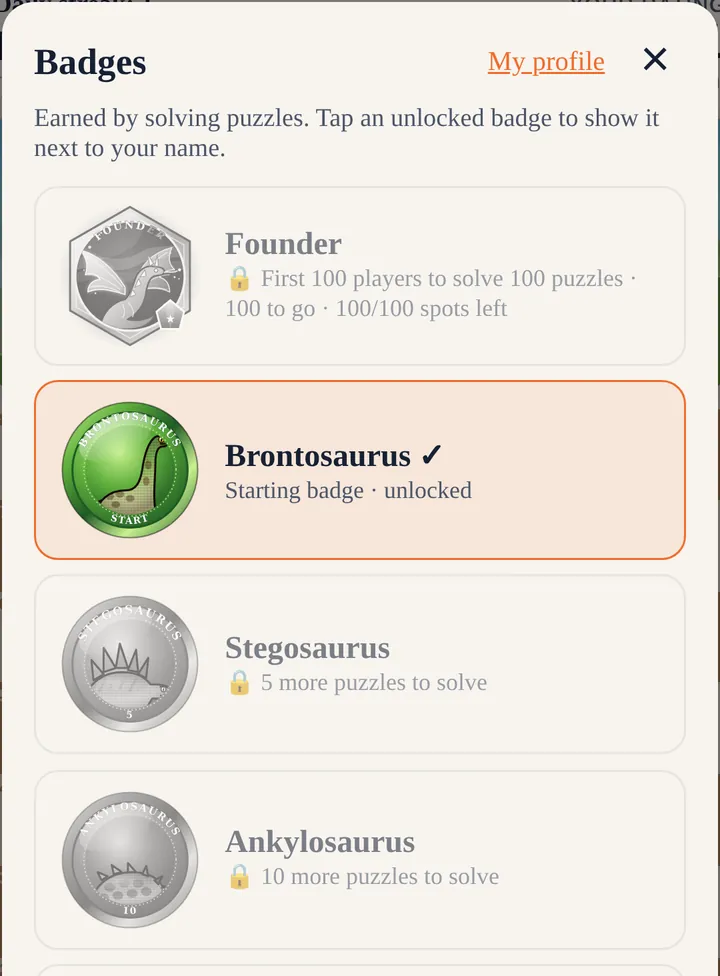
- 20 dinosaur badges. Unlocked by puzzles solved, from Brontosaurus at the start to Tyrannosaurus rex at 10,000 solved. Pick the one shown next to your name.
- Founder badge. Reserved for the first 100 players to solve 100 puzzles.
- The Eye of Howard. Howard can challenge players to a live game, and the Eye's record and game log are public on the Top 100.
- Install it like an app. Add it to your phone's home screen (iPhone or Android), with dark mode and sound you can switch on or off.
If you have been wondering how to stop blundering in chess, this is the habit to build: one safe-or-blunder decision at a time, at your level, every day.
Stop blundering. Start with one puzzle.
Run the check, pick the safe move, and let the Blunderer show you the traps before your opponents do.
Train free